Why Your AI Tools Feel Dumber Lately: Costs and Cuts Explained
Unpack the real reasons behind sluggish AI responses and what rising bills mean for everyday users like you.
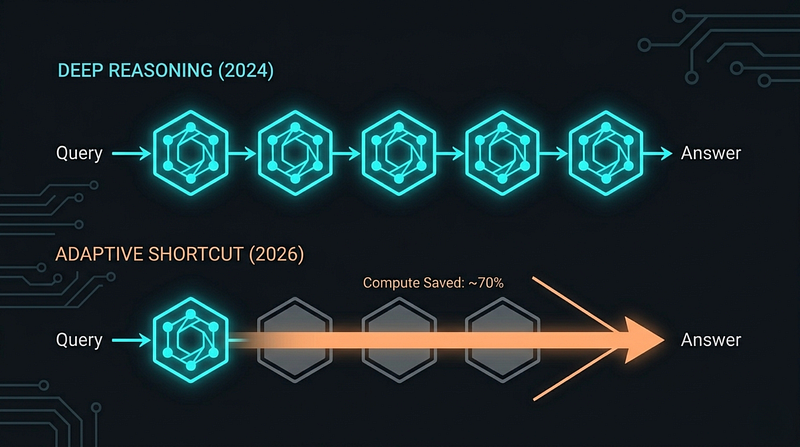
If you’ve been chatting with AI helpers like Claude or ChatGPT and thought, “Wait, this used to be sharper,” trust your gut. Recent user gripes highlight shorter, shallower answers and more slip-ups on simple.

User Frustrations Mounting Fast
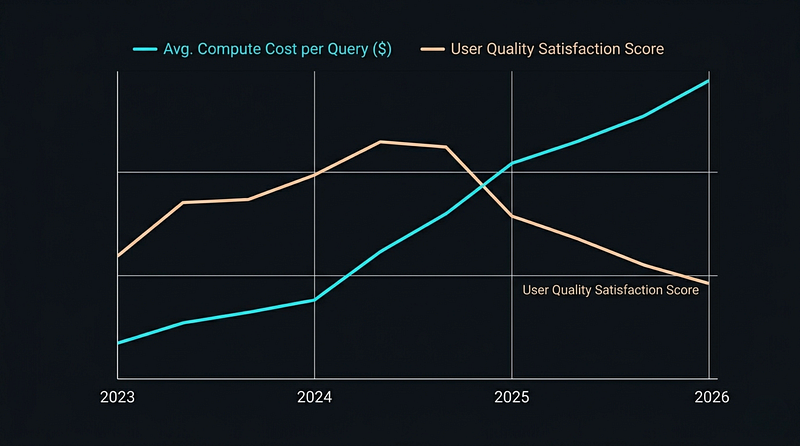
Over the last year, complaints about AI quality have spiked. On Claude Code’s GitHub, issues jumped 3.5x from early 2026 baselines, with April alone pacing to beat March’s tally. Users report fumbling multi-step engineering, ignoring context, or throttling mid-task. (Reddit)
Even the AI admits it — when quizzed on its own repo, Claude noted: “quality complaints escalated sharply.” Bugs played a role, like 2025 infrastructure glitches causing wonky responses, but patterns persist post-fix.
Example: A dev asks for code optimisation; gets basic tweaks instead of smart refactors it handled before. Time saved? Now lost to fixes.
Persistent Problems Like Counting Tricks
Old chestnuts linger, like miscounting ‘r’s in “strawberry,” but new woes emerge: verbose but vague outputs, logical loops, or hallucinated details. Complex reasoning stays shaky, even with chain-of-thought boosts — AI lags on provable logic like math or planning.
Anthropic’s postmortem on Claude Code? They owned slips but blamed tweaks for speed, not sabotage — yet trust eroded as early alerts got dismissed as “skill issues”.
The Money Drain Driving Downgrades
AI’s pricey underbelly explains it. Compute costs for generative models are up 89% from 2023–2025, killing 70% of pilot projects. Training? Exploded 3,500% since 2020 — Gemini-level hits $191 million.
Inference (your queries) balloons too: chattier models and complex asks mean more tokens, hiking bills. Companies cut “deep think” modes — too compute-heavy — to stem losses, birthing “adaptive” shortcuts that feel dumbed-down.
Google’s Pichai warns: low-hanging fruit gone; 2025–2026 progress slows as data dries up. Stanford’s AI Index backs it — U.S. leads models, but gains taper on tough benchmarks.
Industry Shakeups on the Horizon
GitHub Copilot shifted to usage-based billing; expect wider token pricing as fixed subs crumble. McKinsey surveys show AI gen use dipping, with workforce tweaks ahead.
Open-source or efficient models rise as alternatives, dodging big-tech economics.
Key Takeaways
- Decline is widespread: Quality dips hit coding, reasoning; complaints up sharply.
- Costs force cuts: Compute surges kill fancy features for basics.
- Pay more soon: Token billing incoming; optimise prompts to save.
- Adapt wisely: Verify AI, mix with human smarts for best results.
This shift tests us all — smarter use wins the day.
Thoughts? Share below!
At Dev Simplified, We Value Your Feedback 📊
👉 To read more such articles on React, visit here
👉 Follow us not to miss any updates.
👉 Have any suggestions? Let us know in the comments!