Part 1: AWS Cloud Practitioner Essentials
Introduction to client-server models and cloud deployment models
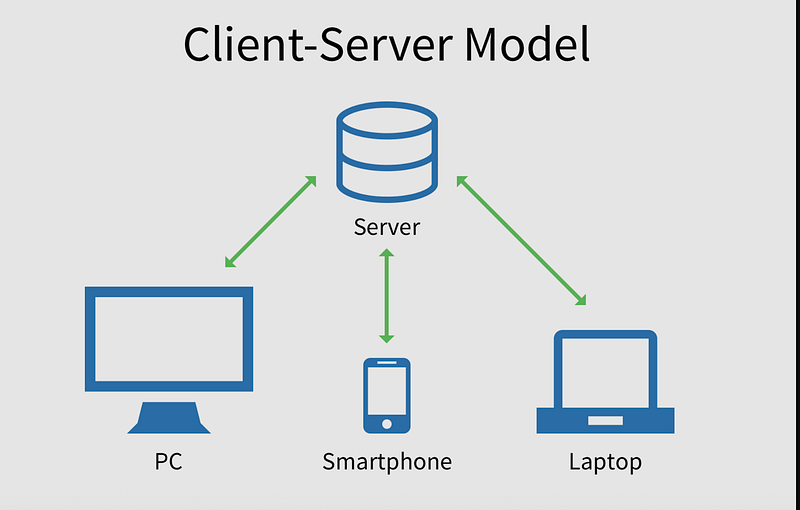
Client-Server Model
Ever opened an app
- To check the weather?
- Played an online game?
- Watched a video on YouTube?
Congrats 🥳— you’ve already used the client-server model.
But let’s break it down in layman's terms so you understand how it really works (and why AWS is built around it).
What is the Client-Server Model?
Think of it like this:
- Client → the person making the request (you, using a browser or app)
- Server → the computer that receives the request, does some magic, and sends a response back
📍 A client could be your laptop, phone, or any frontend interface that sends a request (like: “Hey, give me the latest news or Hey, I want to order a coffee”).
📍 A server could be something like Amazon EC2 (a virtual machine that lives in the cloud and handles that request).
An EC2 instance is a service which helps us gain access to the virtual servers managed by AWS.
👇 Here’s a simple flow:
You (Client) 🧑💻 → request a video
Server (like EC2) 🖥️ → sends back video dataIt’s like ordering food:
- You place the order
- The kitchen prepares it
- Your meal arrives.
Real Example: What Happens When You Open Instagram?
- Your phone (client) asks Instagram’s backend (server) for your feed.
- The backend processes your account info and fetches posts.
- It sends the content back to your phone.
That’s a client-server transaction — happening in milliseconds.

Cloud Deployment Models: Where Are These Servers?
There are 3 ways companies deploy these servers depending on their needs:
1. Cloud-Based Deployment (The Modern Default)
Most startups and modern businesses are going all-in on the cloud. That means using virtual servers managed by a third party like AWS
You:
- Run apps entirely in the cloud
- Use services like EC2, S3, and RDS
- Stop worrying about managing physical servers or hardware.
Example: A fintech startup builds their entire backend with AWS — no office servers, no cables, just cloud.
2. On-Premises Deployment (AKA Private Cloud)
Some companies still keep their servers in-house due to:
- Legacy software
- Compliance regulations
- Control preferences
This is like setting up your own mini AWS in your office (but more expensive, harder to scale, and difficult to manage).
Example: A hospital runs sensitive patient data on local servers to meet strict data policies, even if they use cloud for analytics.
3. Hybrid Deployment (Best of Both Worlds)
This one’s rising fast.
You:
- Keep some services in the cloud
- Run others on your local infrastructure
- Sync both systems for maximum flexibility
Example: A logistics company runs its ERP system on-premise but uses AWS Lambda for processing real-time tracking data.
Why Are Companies Moving to the Cloud?
Because cloud = business superpower.
Here’s what you unlock with cloud computing (especially AWS):
Trade Fixed Costs for Pay-as-You-Go
- No need to buy expensive servers up front. Pay only for what you use.
Stop Maintaining Data Centers
- No fans, no wires, no midnight server crashes.
Stop Guessing Capacity
- Scale up or down based on traffic. No more “we crashed on launch day” horror stories.
Leverage Massive Scale
- You’re using the same infrastructure as Netflix, Airbnb, and NASA. That’s wild.
Move Faster
- Spin up new services in minutes. Deploy faster, fail faster, learn faster.
Go Global Instantly
- Launch your app in Europe, the US, or Asia — without hopping on a flight.
Your Action Item for Today
Go to https://play-with-docker.com or https://labs.play-with-k8s.com and try spinning up a test server.
Or even easier — open AWS and try launching a free-tier EC2 instance. You’ll feel what cloud computing actually is.
Coming Up Tomorrow
Day 2: AWS EC2 instance types and pricing.
Hint: It’s way more than “just storage.”

Let’s Talk
When was the first time you unknowingly used the client-server model?
Drop it in the comments. Let’s nerd out. 👇

At Dev Simplified, We Value Your Feedback 📊
👉 Don’t forget to clap 👏 for the writer.
👉 Follow us to not miss any updates.
👉 Have any suggestions? Let us know in the comments!